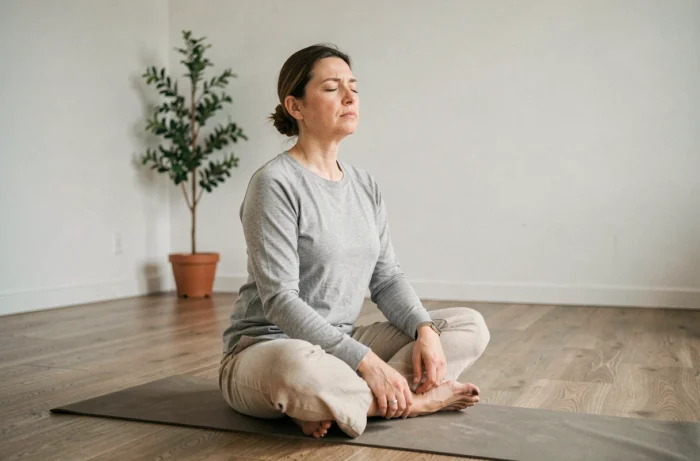
Sophrology is a relaxation method that combines guided breathing, gentle movements, and visualization. It attracts a wide audience each year, from stressed individuals to pregnant women and athletes. The title of sophrologist is not protected by a professional order, and the field of alternative care remains loosely regulated in France. Before making an appointment, some areas of concern deserve to be examined closely.
Anomalies identified by the DGCCRF in wellness practices
Competitors rarely address institutional control data. However, a survey conducted by the DGCCRF from October 2020 to September 2021 involving 381 establishments covering around fifty wellness disciplines yielded a striking result: at least one anomaly in about two out of three establishments. These anomalies related to unfounded therapeutic claims, lack of information on prices, or misleading commercial practices.
This figure pertains to all controlled disciplines, not just sophrology. However, it provides an indication of the overall compliance level of the sector in which sophrology is situated. A serious practitioner does not promise healing and clearly displays their fees, training, and the limits of their support.
Additional information on the specific risks associated with this discipline is detailed on the Soin Et Compassion website, with a focus on precautions to take on a case-by-case basis.
Adverse effects during sophrology sessions: what is documented
Sophrology does not cause side effects in the pharmacological sense. The reactions reported by practitioners fall under two distinct mechanisms, which differ in frequency and scope.

Reactions related to guided breathing
A deliberately slowed or amplified breathing alters blood CO2 levels. In some individuals, this triggers dizziness, tingling in the hands, a sensation of chest tightness, or a paradoxical increase in anxiety. These manifestations are brief and disappear once the exercise stops.
Paradoxical anxiety triggered by relaxation is a known phenomenon: muscle and mental relaxation can bring up tensions that are usually contained. A person who has never practiced deep relaxation may experience this moment as destabilizing, without it indicating an objective danger.
Emotional release and post-session fatigue
Crying, temporary irritability, or marked fatigue in the hours following a session are regularly reported. These reactions reflect a release of muscle tone and emotional liberation. They do not pose a risk in themselves, but they can be surprising when not anticipated by the sophrologist beforehand.
A trained professional informs the person being supported about these possibilities from the first session. The absence of this prior information is a warning sign regarding the quality of the support.
Contraindications and medical limits of sophrology
Sophrology is not a medical treatment. This simple statement has concrete consequences that the legal framework reinforced in 2024: encouraging a person to abandon medical treatment in favor of a wellness practice is now punishable. For someone considering sophrology, this is a clear guideline.
Several situations require prior medical advice or make the practice unsuitable:
- Psychotic disorders (schizophrenia, acute bipolar disorder) can be exacerbated by visualization exercises or altered states of consciousness. Sophrology is not designed to contain this type of decompensation.
- Severe depressive states require psychiatric follow-up. Sophrology can be complementary but never a substitute for treatment prescribed by a doctor.
- Recent psychological traumas (sudden bereavement, assault, accident) require a structured therapeutic framework. A sophrologist who is not also a psychologist or psychiatrist does not have the tools to manage uncontrolled trauma resurgence.
- Epilepsy or certain neurological conditions require particular vigilance regarding breathing and deep relaxation exercises.
Sophrology supports; it does not heal. The confusion between the two is the most significant risk documented by regulatory bodies.
RNCP certification of the sophrologist: a concrete point of vigilance
The title of sophrologist is not regulated. Anyone can set up without a recognized diploma. Serious training prepares for a certification registered in the National Directory of Professional Certifications (RNCP), but the status of an RNCP certification can become inactive without training organizations immediately signaling it.
A recent case illustrates the problem: a “Sophrologist” certification referenced by a professional insurance broker was listed as inactive since January 2025. This information came from an indirect source, not from the official directory of France Compétences. Before paying for training, direct verification on the France Compétences website remains the only reliable approach.
The choice of practitioner follows the same logic. Asking for the name of the school, the duration of the training completed, and the existence of supervision or an ethical framework (membership in a professional union, ethical charter) helps eliminate the least rigorous profiles.
Sophrology and care pathways: the risk of substitution
The most documented danger does not come from the method itself but from its positioning within a care pathway. When sophrology delays a medical consultation, diagnosis, or treatment, the consequences can be serious.
This substitution risk does not depend on the technique practiced in the session. It depends on the practitioner’s discourse and the patient’s understanding. A sophrologist who claims to be able to “treat” chronic pain, a persistent sleep disorder, or a debilitating anxiety state without referring to a doctor is stepping outside their area of competence.
A competent sophrologist refers to a doctor as soon as symptoms exceed the scope of wellness. This boundary, simple to state, remains blurred in the daily practice of many offices. Responsibility is shared: the practitioner must know their limits, and the person being supported must maintain their medical follow-up in parallel.
Sophrology presents few direct physical risks for a healthy person. The real points of vigilance lie before the session: verifying the practitioner’s training, ensuring they do not substitute for a health professional, and keeping in mind that the regulatory framework of the sector remains fragile despite recent reinforcements.